BAHETI GROUP specializes in high-quality ground covers, shading nets, and road covers. With 30 dedicated Sulzer looms, we efficiently produce woven and knitted geotextiles for a wide range of industrial and infrastructure applications.

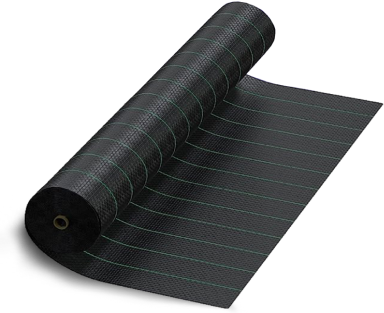
At BAHETI GROUP, we specialize in the production of high-quality Geotextile fabrics, a key segment within the broader category of geo-synthetics. Geotextiles are generally classified into woven, non-woven, and knitted types, each designed for specific engineering applications. Our core expertise lies in the manufacturing of woven and knitted geotextiles, crafted using a variety of yarns with properties tailored to suit diverse end-use requirements. The primary functions of our geotextile fabrics include separation, filtration, drainage, reinforcement, barrier formation, and protection, making them ideal for infrastructure, civil engineering, and environmental projects.
Synthetic or natural fibers are used in the creation of geotextiles to produce a substance that resembles fabric. There are several ways to create geotextiles, such as:
After the geotextile is manufactured, it can undergo additional processing to form it into rolls or sheets.
At BAHETI GROUP, our geotextile fabrics are primarily composed of polypropylene, known for its excellent durability, chemical resistance, and performance in demanding environments. Depending on the application requirements, we also utilize other high-performance polymers such as polyester, high-density polyethylene (HDPE), polyamide (nylon), and blends involving polypropylene. This material versatility allows us to deliver geotextiles that are engineered for strength, longevity, and optimal performance across a wide range of infrastructure and geotechnical projects.
Woven geotextiles are produced by weaving individual yarns on high-precision looms to create a strong and consistent fabric structure. We utilize a variety of materials such as slit film, fibrillated yarn, and monofilaments, while maintaining a consistent and reliable weaving process across all types. This ensures uniformity, high tensile strength, and durability in every roll we produce.
Knitted geotextiles, on the other hand, are developed by interlocking yarns through a looping method, forming flexible and adaptable fabric structures. At BAHETI GROUP, we combine advanced knitting techniques with complementary processes like weaving to enhance the performance and structural integrity of our knitted geosynthetics.
BAHETI GROUP specializes in high-quality ground covers, shading nets, and road covers. With 30 dedicated Sulzer looms, we efficiently produce woven and knitted geotextiles for a wide range of industrial and infrastructure applications.
With decades of experience in Geotextile manufacturing, BAHETI GROUP holds a competitive edge by combining deep industry knowledge with large-scale production capacity, enabling us to deliver high-quality products with greater efficiency and consistency.

A Legacy of Trust and Excellence
Leading Manufacturers & Exporters
Committed to Quality & Innovation
Serving Industries Worldwide